Discover Big Bear Lake
Do You Need an Adventure Pass in Big Bear Lake?

This article may contain affiliate or sponsored links. If you click or book through certain links, we may earn a commission at no additional cost to you.
Sometimes — it depends on where you park.
If you’re planning to hike, explore trails, or park near outdoor areas in Big Bear Lake, you’ve probably come across the Adventure Pass.
It’s one of the most common points of confusion for visitors — mainly because whether you need one depends on where you park, not just what you’re doing.
If you’re trying to figure out whether you actually need one, here’s how it works in Big Bear — without overcomplicating it.
Do You Need an Adventure Pass in Big Bear?
Short answer:
Sometimes — it depends on where you park.
This is where most people get tripped up.
You’ll usually need an Adventure Pass if:
- You’re parked at a trailhead in the National Forest
- You pull off along a forest road
- You’re using undeveloped or forest-managed parking areas
You usually do NOT need one if:
- You’re in the Village or town areas
- You’re parked in a city-maintained lot
- You’re at developed parks or marinas
The key thing to remember:
It’s about the parking location, not the activity.
You can also use an America the Beautiful (National Parks) Pass instead of an Adventure Pass in eligible areas, which covers the same requirement in most National Forest locations.

What Is the Adventure Pass?
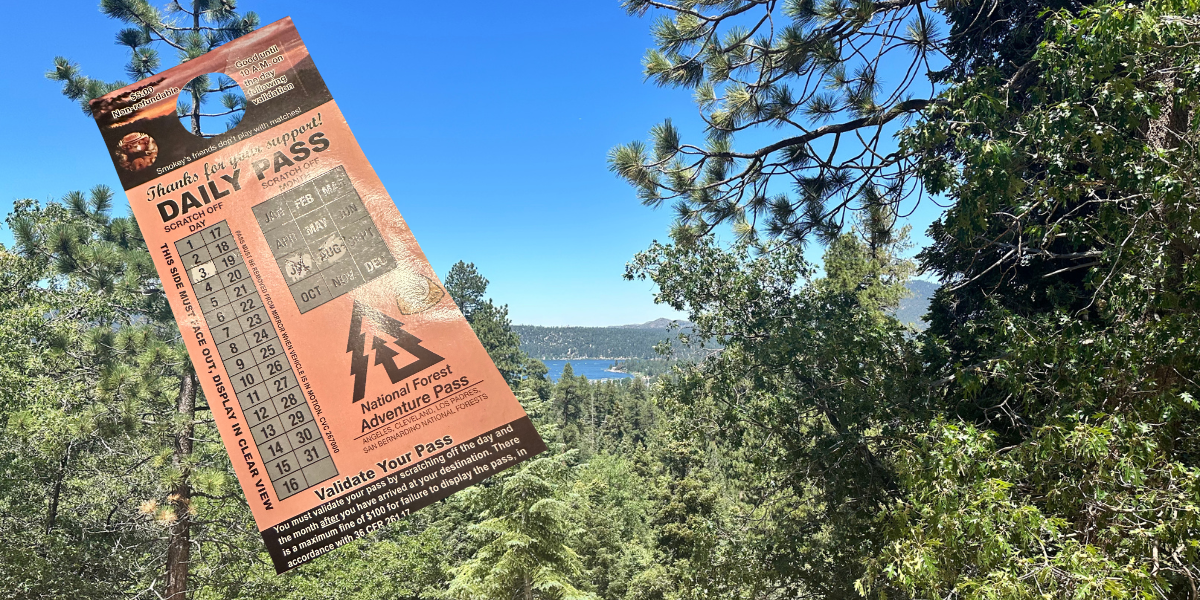
The Adventure Pass is a recreation pass required for parking in certain areas managed by the U.S. Forest Service within the San Bernardino National Forest.
In Big Bear, it mainly applies to:
- hiking trailheads
- forest access roads
- roadside pullouts on forest land
It’s not a general fee for visiting Big Bear — only specific areas require it.
When You’ll Usually Need One
In Big Bear, the pass usually comes into play once you’re outside of town and closer to forest-managed land.
You’ll most commonly need one when:
- Parking at hiking trailheads in the forest
- Using roadside pullouts along forest roads
- Stopping in less-developed areas without clear parking infrastructure
Local insight:
Most confusion happens at trailheads and roadside pullouts where it’s not always obvious whether the area counts as a “lot” or just a place to park.
Some spots have signs or kiosks nearby, while others don’t — which is why people second-guess whether they need a pass.
When You Usually Don’t Need One
There are plenty of places where an Adventure Pass is not required.
These typically include:
- The Village and surrounding town areas
- City parks and developed recreation areas
- Many paved and clearly maintained parking lots
- Areas with posted signage stating no pass is required
Local insight:
If you’re staying near the lakefront parks or in town, you usually won’t need one. The pass mostly comes up once you head toward trails or forest access points.
Can You Use an America the Beautiful Pass Instead?
Yes — in most cases, an America the Beautiful pass can be used instead of an Adventure Pass in Big Bear.
These annual passes are valid across federal recreation sites and typically cover parking requirements in National Forest areas as well.
Local insight:
If you already have one from visiting national parks or other federal lands, you usually won’t need to purchase a separate Adventure Pass.

Common Adventure Pass Mistakes
A few things that tend to trip people up:
- Assuming the pass is required everywhere in Big Bear
- Not checking posted signs at trailheads or parking areas
- Buying one unnecessarily “just in case”
- Not displaying the pass correctly on the dashboard
- Assuming no sign means no pass is needed
Reality:
If there’s no clear signage, people often assume they don’t need one — but that’s not always the case. It’s always worth taking a quick look before you leave your car.
Where to Buy an Adventure Pass
Adventure Passes are easy to purchase locally.
You can usually find them at:
- visitor center
- local shops
- gas stations
- sporting goods stores
Local tip:
The
Big Bear Discovery Center is one of the best places to pick one up. You can grab a pass, get maps, and talk to a ranger before heading out — which helps if you’re not sure where you’re going.
- They’re also available online through the Forest Service.
How Much Does the Adventure Pass Cost?
Pricing can change, but generally:
- Daily passes are available -$5
- Annual passes are available for frequent visitors -$30
For the most up-to-date pricing, it’s best to check with the Forest Service or local vendors.
How to Display Your Adventure Pass
If you’re using an Adventure Pass or an America the Beautiful pass, make sure it’s clearly visible:
- Place it on your dashboard
- Make sure it can be seen from outside the vehicle
- Follow any instructions included with the pass
If it’s not displayed properly, you can still receive a citation — even if you purchased one.
Planning to Hike? Start Here
If you’re heading out to trails, it’s worth knowing ahead of time whether your parking area requires a pass.
Some do, some don’t — and it’s not always obvious unless you’ve been there before.
Frequently Asked Questions
Do I need an Adventure Pass for hiking in Big Bear?
Sometimes. Many trailheads require one, but not all. It depends on where you park.
Do I need an Adventure Pass for Alpine Pedal Path?
Typically no, since it’s a developed and maintained area — but always check posted signage.
Where can I buy an Adventure Pass in Big Bear?
You can buy the Adventure Pass at the Big Bear Discovery Center or local retailers like Bear Valley Bikes, Big Bear Visitor Center, and most sporting goods shops along Big Bear Blvd.
Can I use an America the Beautiful pass in Big Bear?
Yes. In most National Forest areas, an America the Beautiful pass can be used instead of an Adventure Pass for parking.
What happens if I don’t have an Adventure Pass?
If you’re parked in a required area without one, you may receive a citation.
Is the Adventure Pass required everywhere in Big Bear?
No. It only applies to certain National Forest areas, not the entire town.